What are activated carbons?
What are they used for?
Activated carbon can be in granular form (Granular activated carbon, GAC) or powdered form (Powdered activated carbon, PAC) and is characterised by a high absorption power: the presence of activated carbon in respiratory protective devices is essential to retain toxic gases or vapours and unpleasant odours, because it allows the user to work without exhaling them.
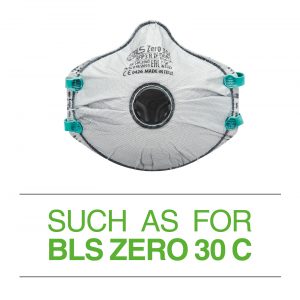
In addition to the filters in reusable masks, some BLS disposable mask models also include an activated carbon-impregnated layer in addition to the filtering material: the treated products are able to absorb nuisance odours, increasing protection and comfort during use. This is the case, for example, with the BLS Zer0 30 C filtering facepiece.
Ma come avviene l’assorbimento delle sostanze indesiderate?
Ma come avviene l’assorbimento delle sostanze indesiderate?
But how does the absorption of unwanted substances take place?
The mechanism under consideration, specifically defined as adsorption (a process whereby the solute adheres to a solid surface), can be applied in the field of liquid or air purification.

This function is possible thanks to the very high porosity of carbon (more than 1000mq/g) and thanks to its large adsorption surface (surface area per unit volume): these characteristics make carbon a substance with a high retention capacity.
Activated charcoal can be produced from various organic substances with a high carbon content, such as wood, charcoal, peat, coconut, etc.
It is called "activated carbon" if its adsorptive properties have been enhanced by appropriate treatments.
In particular, there are two types of activated carbons: untreated activated carbons, which are used for easily absorbable substances, and impregnated carbons, which are the result of a process that modifies the substance itself, allowing it to be absorbed.
The purifying properties of carbon have been known since ancient times, but it is only in recent times that it has begun to be used in industry.
The first drinking water applications date back to 1800 in England, where it was used to remove odours from treated water.
Today, this substance is used in the filtration, purification, deodorisation and decolourisation of fluids.