Gases and vapours
Gases and vapours belong to those classes of substances that can threaten respiratory health and require specific regulations in the professional field.
Gases are characterised by their extreme volatility, as they are in an aeriform state at ambient temperature and pressure. (e.g. oxygen, nitrogen, carbon dioxide).
Oxygen, nitrogen and carbon dioxide are a few examples: their high kinetic energy produces random movements, giving this substance the advantage of moving from one place to another without hindrance.
Vapours, on the other hand, characterise substances that at ambient temperature and pressure are in a liquid or solid state and through processes of boiling or evaporation, pass to an aeriform state (e.g. acetone, toluene, hexane).
Acetone, toluene and hexane are some examples. Another example occurs when water is boiled: in this case it is called water vapour.

While sharing a gaseous origin, gases and vapours differ in a number of ways:
gases are invisible, but can be perceived by smell, whereas vapours are visible;
gases are the lowest form of state that can exist in matter, while vapours have an intermediate state between gas and liquid;
gases have a thermodynamic state at room temperature, while vapours exist as a mixture of two states at room temperature;
gases tend to disperse whenever there is a change in equilibrium, vapours remain the same even if the equilibrium state changes.


What are inert gases?
Inert gases are toxic gases that do not support human respiration.
Inertisation limits the action of oxygen inside the system to prevent the formation of explosive atmospheres. Inertisation units are used when it is necessary to avoid:
emission of fumes into the atmosphere (contamination);
the entry of air into the plant (oxidation).
If materials are processed, whose exhalations combined with oxygen in the air result in the formation of an easily flammable mixture, any possible risk of explosion must be prevented. In practice, air is replaced by inert gas.
Inert gases are non-flammable substances which, because they do not react with combustibles, do not promote the ignition of fires.
Nitrogen, argon and helium are some examples and present some peculiar risks:
inert gases act without warning, as they are odourless, colourless and tasteless and therefore not easily detected;
asphyxiation by inert gases occurs without any premonitory physiological symptoms, or the victim often does not recognise the symptoms (dizziness, headache or difficulty in speaking, etc.);
inert gases act quickly and the speed of medical intervention is critical.
Inert gases are generally used to replace atmospheres containing oxygen (O2) or moisture (N2O) in order to protect products sensitive to the presence of these two components.
A substance that conveys a pungent, recognisable odour is generally added to the gases, thus increasing the level of safety for those exposed.
When does air become a hazard?
The air we breathe in the normal atmosphere has an oxygen content (%) at sea level ranging from a minimum of 19.5 % to a maximum of 23.5 %.
However, in the presence of inert gases and oxygen deficiency (less than 18%), inhaled air ceases to be breathable to the point of causing asphyxiation and death to those exposed to it.

The severity of exposure to gases and vapours can vary from acute to chronic and the effect on respiratory health depends on the magnitude, duration of exposure and the specific agent.
Chlorine, phosgene, sulphur dioxide, hydrochloric acid, hydrogen sulphide, nitrogen dioxide, ozone and ammonia are among the most important irritant gases. Hydrogen sulphide is also a potent cellular toxin, which blocks the cytochrome system and inhibits cellular respiration.
A common exposure involves domestic mixing of ammonia with detergents containing bleach; this releases chloramine (NH2Cl), a highly toxic gas that when it comes into contact with mucous membranes decomposes and generates hydrochloric acid, which is toxic and corrosive, and free radicals, which are carcinogenic.
Acute exposure to toxic gases generally characterises industrial accidents, which occur as a result of the release of large quantities of the substance over a short period of time.
In 1984, the release of methyl isocyanate from a chemical plant in Bhopal, India, killed more than 2000 people.
Risk of asphyxiation in wine cellars
One of the industrial sectors where environmental gas pollution can be detected is in the many wine cellars in Italy.
In the environments of this sector, it is possible for gases such as carbon dioxide, nitrogen and argon to be released and the related risk of asphyxia to occur. Asphyxiation appears to be the leading cause of death in this type of confined space accident.
In particular, the risk of asphyxiation in cellars "is determined by oxygen deficiency (anoxic anoxia), a condition that occurs when oxygen is less than 21% by consumption in the same environment.
Oxygen consumption can occur while carrying out activities in confined spaces in the absence of adequate indoor air renewal.
How can you protect yourself?
In gas and vapour protection, the nominal protection factor is given by the type of mask (half mask or full mask) combined with the filter used.
To date, the toxic gases recognised as such under RD No. 147/1927 are as follows:
Hydrogen cyanide
Ammonia
Sulphur dioxide
Petrol containing organometallic compounds
Cyanides of: potassium, sodium, calcium, barium, silver, cadmium, copper and zinc
Chlorine
Chloropicrin
Cyanogen: bromide and chloride
Cyano-carbon ether
Phosgene
Isonitriles
Ethylene Oxide
Tetraethyl lead
Carbon disulphide
Hydrogen phosphorus
Methyl bromide
Tetramethyl lead
Methyl sulphate
Methyl chloride
Hydrofluoric acid
Boron trifluoride
Methylmercaptan
Tetrahydrothiophene
Dimethylsulphide
Ethylisopropylsulphide
Ethylmercaptan
Diethylsulphide
To select the right protection, it is necessary to know the chemical nature of the pollutant by ensuring that the oxygen level is above 17%.
For more information on the nominal protection factor (FPN) and the PPE selection read the last paragraph of our article on Health Risks of Welding: PPE selection.
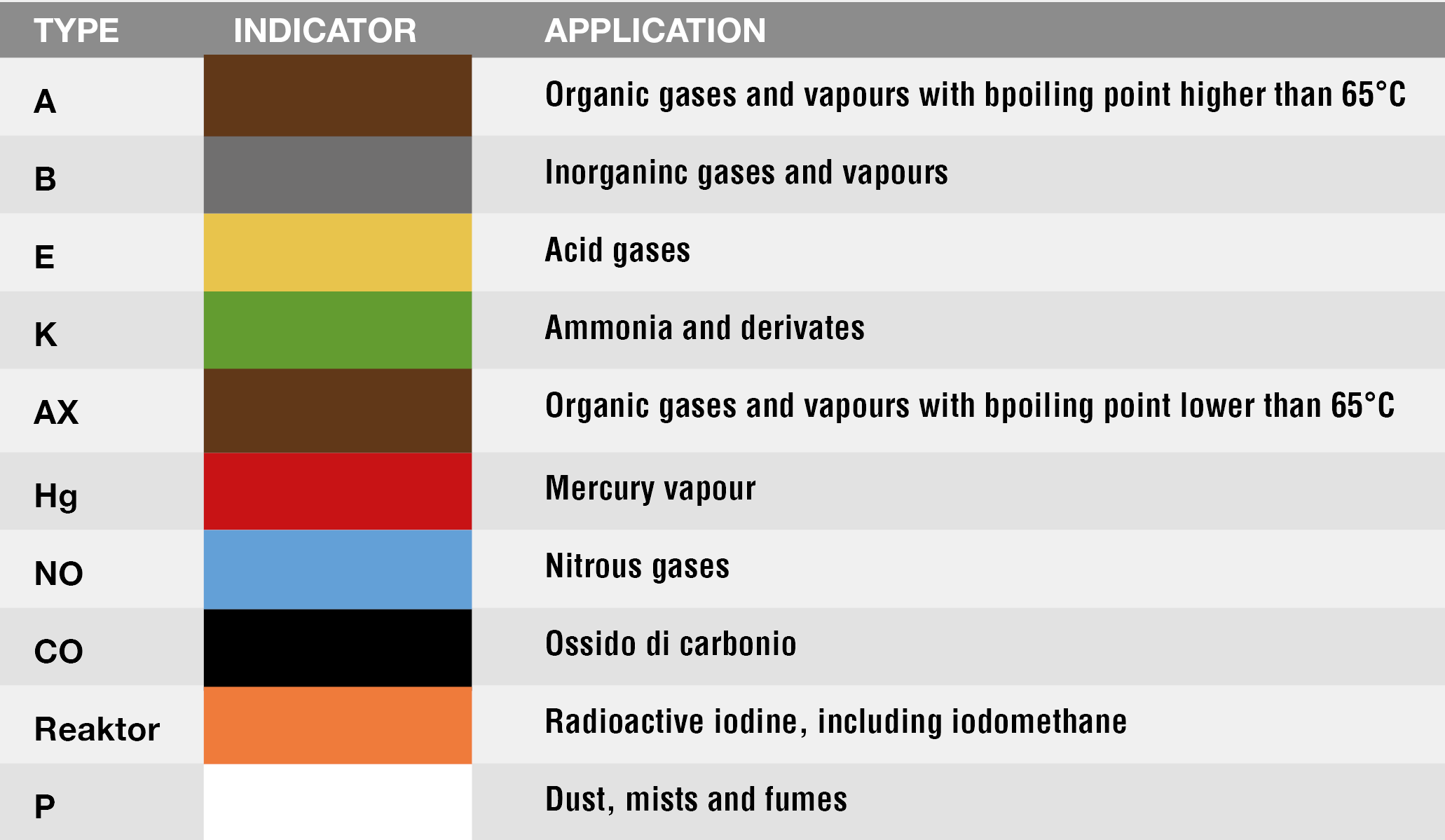
The European Standard EN 14387:2004+A1:2008 defines protection against gases and vapours according to the following table:

Every protection has its own colour: which is yours?

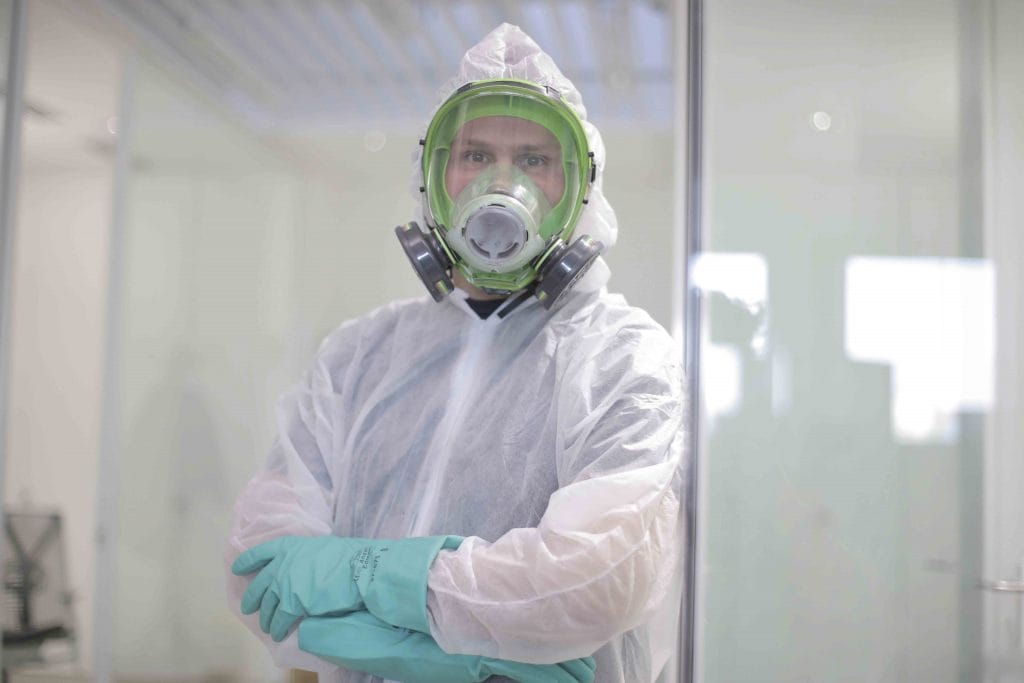
The products that BLS offers you to protect your health from toxic gases and vapours are half masks and full face masks with a wide range of models that vary in terms of type of connection, materials and method of use.
Choose the one that is right for you.
Single-filter products are associated with the BLS 400 universal connection filter series. Bi-filter products are associated with the BLS 200 filter series with b-lock connection, the bayonet connection made by BLS.

Stay informed, stay safe.