International Day for Safety and Health at Work
Too many people are literally killed by their own jobs every year.
the alarming reality of occupational diseases and injuries is an urgency at political, healthcare and corporate level, to be addressed by employers and workers together to help in reducing pressure on health systems, rebalancing productivity levels and protecting household incomes.
What is the impact of work-related deaths?
The World Health Organisation (WHO) in conjunction with the International Labour Organisation (ILO) reports that nearly 2 million people die each year from work-related causes, most of which are due to respiratory and cardiovascular diseases, according to WHO/ILO estimates in the Global Monitoring Report 2000-2016:
Exposure to long working hours is the key risk, as it is responsible for some 750,000 deaths.
Exposure to workplace air pollution (particulates, fumes and gases) is responsible for 450,000 deaths, which is the second major occupational risk detected.

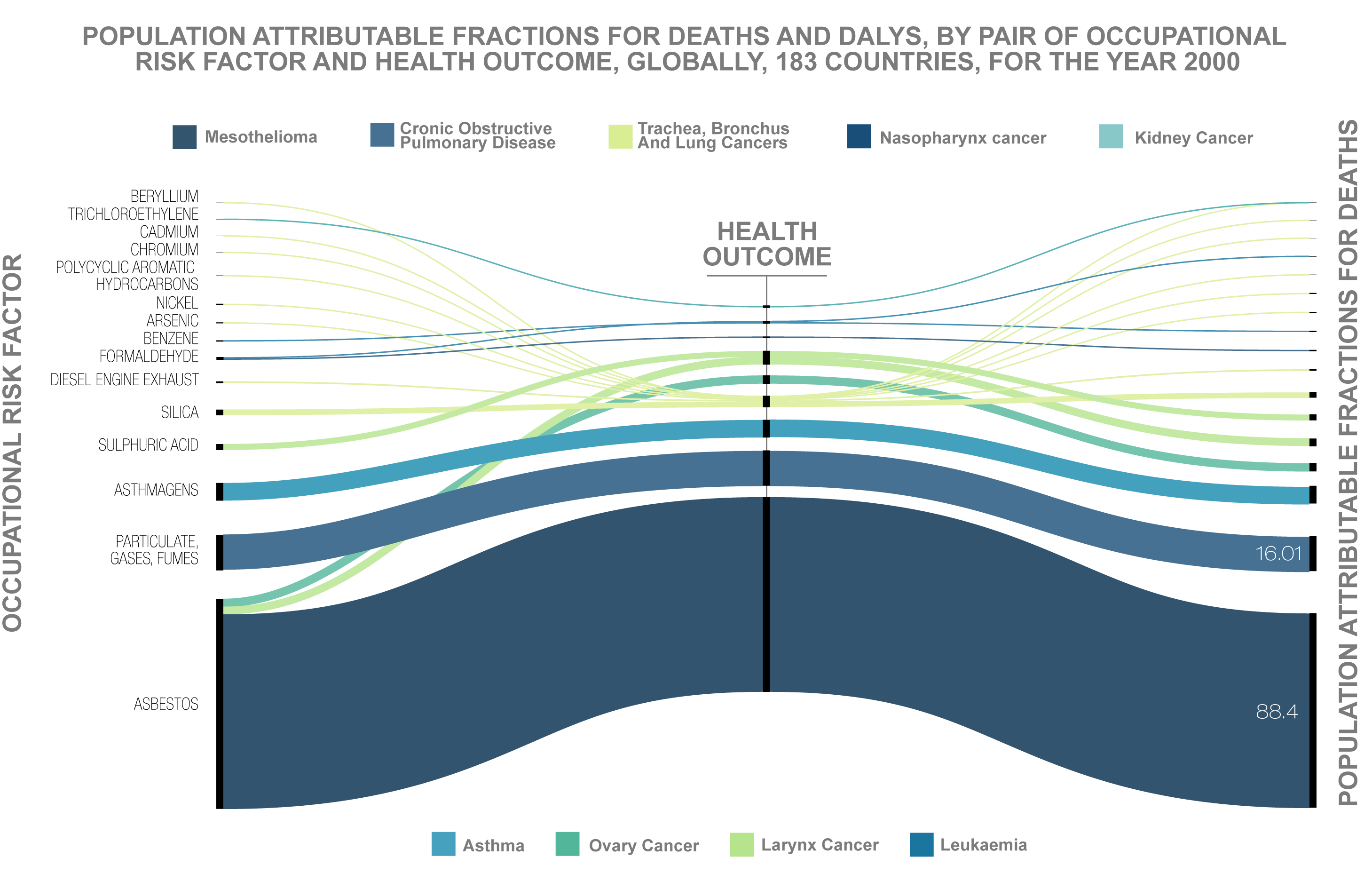
The burden of occupational diseases attributable to the inhalation of particles, gases and fumes is 450,381 deaths and 10.86 million DALYs (Disability-adjusted life years, i.e. a measure of the overall severity of an illness, expressed as the number of years lost due to it, to disability or premature death).
These deaths and DALYs occur as a result of chronic obstructive pulmonary disease DISEASE, and have decreased by 4.9% (from 473,725) and 1.8% (from 11.05 million), respectively, since 2000.
La proporzione di decessi professionali attribuibile all'inalazione di particelle, gas e fumi in 183 paesi per l'anno 2016 è del 23,9% dei decessi e del 12,1% dei DALYs totali.
How can we help with prevention?
To significantly contribute to the reduction of these mortalities it is necessary to implement occupational safety and health systems to make them strong, effective and sustainable by referring to international labour standards and WHO/ILO tools and guidelines.
The Global Monitoring Report 2000-2016 sets out for each risk factor a unique set of preventive actions to be practised:
- for the prevention of exposure to long working hours, an agreement on healthy working time limits is required;
- for the reduction of workplace exposure to air pollution, dust control, ventilation and personal protective equipment (PPE) are recommended.
In particular, prevention of harm from occupational exposure to particulates, gases and fumes could be achieved through interventions that introduce engineering controls, such as physical filtering or segregation of the emission source, or the application of general, local and specialised ventilation and dust suppression techniques.
According to the Global Monitoring Report, workers in every sector are at risk from inhalation of particulates, gases and fumes.
Chronic obstructive pulmonary disease occurs with an abnormal inflammatory response of the lungs to harmful particles or gases.
Each of us has a responsibility to stop work-related deaths and accidents.
Help to do this.